THCa, the non-psychoactive precursor in raw hemp, does not directly bind to CB1 receptors in the endocannabinoid system. Upon heating, THCa decarboxylates into active THC, which then binds to these receptors to produce psychoactive effects. THCa endocannabinoid conversion process distinguishes legal THCa hemp from traditional cannabis.

Key Takeaways

  • THCa does not directly bind to CB1 receptors in the endocannabinoid system due to its extra carboxyl ring.

  • Heating THCa through smoking, vaping, or baking removes the carboxyl group and converts it into psychoactive THC.

  • THCa’s molecular structure prevents tight binding to cannabinoid receptors in the brain, blocking the psychoactive cascade.

  • Unheated THCa engages with peripheral receptors and other signaling networks throughout the body instead of CB1 receptors.
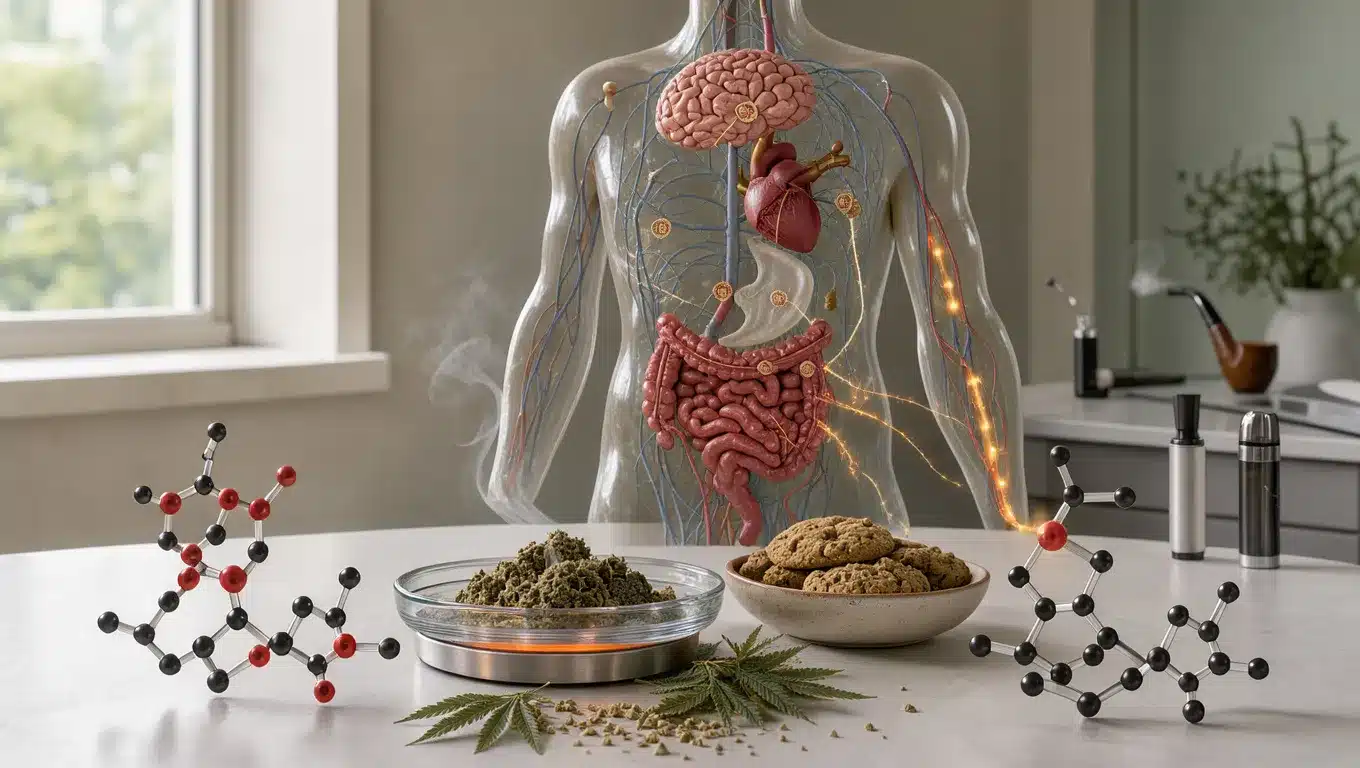
What is the endocannabinoid system?

The endocannabinoid system (ECS) is a neuromodulatory system that partially regulates cognitive and emotional processes in the human central nervous system. This signaling network controls a range of bodily functions in both humans and animals. Without a properly functioning ECS, critical physiological balance deteriorates, leaving mood, appetite, and memory regulation compromised.

The ECS extends far beyond the brain. Receptors and signaling pathways are prevalent throughout the peripheral nervous system and the entire body. Active sites exist in the male and female reproductive tracts. Organ systems such as the urologic and gastrointestinal system also contain these pathways, according to research published in the PMC database. This widespread distribution explains why cannabinoid receptors influence so many different physical states.

What does the endocannabinoid system regulate?

The ECS regulates various processes essential to daily health. Appetite control, mood stability, and memory formation all depend on this network. Disruption to these processes manifests as tangible quality-of-life losses, from sleep disturbances to emotional dysregulation.

How does the ECS maintain balance in the body?
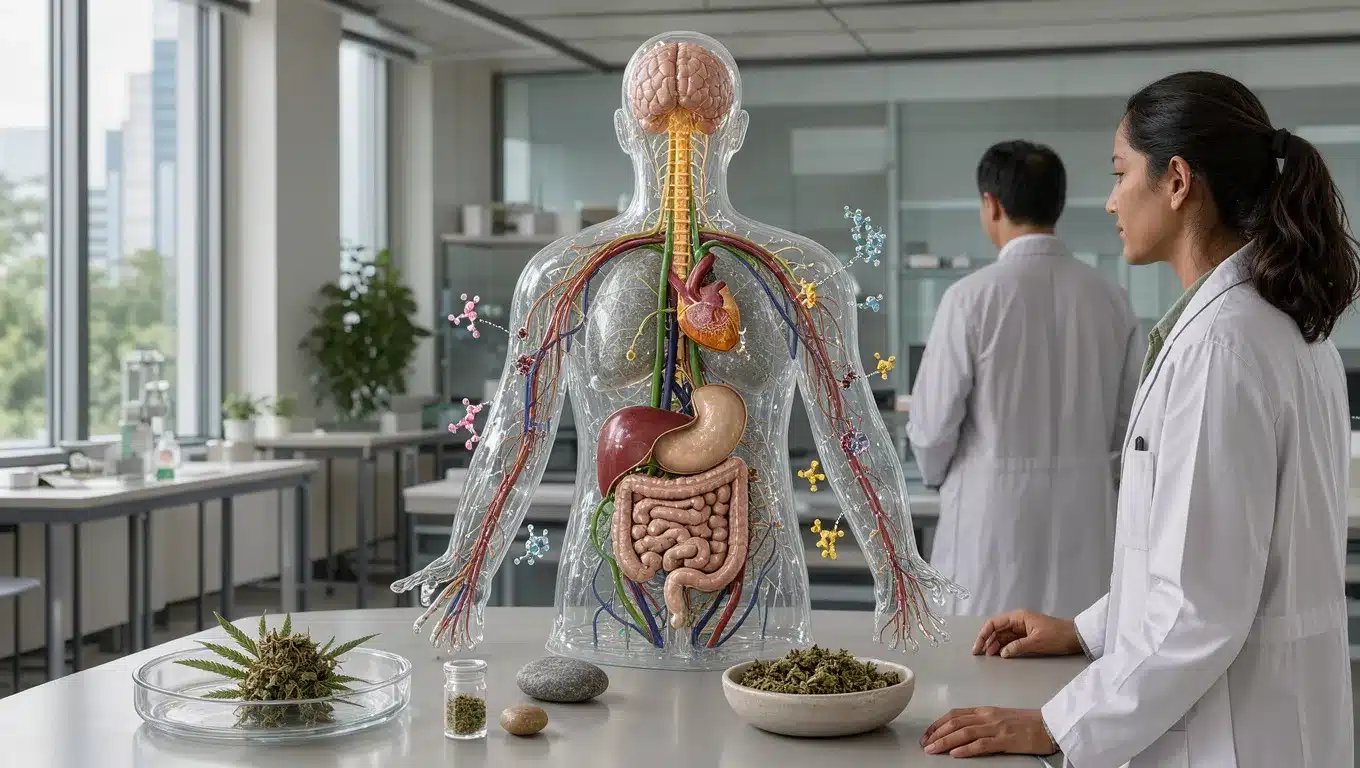
The system acts as a homeostatic regulator across multiple organ systems. It modulates neurological activity in the central nervous system while simultaneously managing peripheral functions. THCa body interaction research continues to reveal how cannabinoids engage with this network. The THCa endocannabinoid relationship differs from THC’s direct receptor binding, a distinction that matters for consumers seeking specific effects without psychoactivity.

How does THCa differ from THC chemically?

Tetrahydrocannabinolic acid (THCa) and tetrahydrocannabinol (THC) share a nearly identical molecular framework. The critical distinction lies in a single structural feature. THCa contains an extra carboxyl ring that THC lacks. This additional group prevents THCa from binding effectively to cannabinoid receptors in the central nervous system. Without that binding, the psychoactive effects associated with THC do not occur. The chemical transformation from THCa to THC happens through decarboxylation. Heat removes the carboxyl group as carbon dioxide. The molecule then fits the CB1 receptor and produces intoxicating effects.

What happens to THCa when cannabis is heated?

Heating raw cannabis triggers a chemical reaction called decarboxylation. The process strips away the extra carboxyl ring from the THCa molecule. What remains is the smaller, active THC compound. This conversion explains why raw cannabis flower does not cause a high. Smoking, vaping, or baking the flower supplies the heat needed for the change. The resulting THCa body interaction shifts from non-intoxicating to psychoactive.

Why does the carboxyl group matter for the endocannabinoid system?

The carboxyl group makes the THCa molecule too large and incorrectly shaped for the CB1 receptor. The THCa endocannabinoid system interaction is therefore indirect and non-psychoactive. THC, by contrast, has a compact structure that binds directly to CB1 receptors. This binding triggers the dopamine release and altered perception users recognize as a high. The structural difference determines whether a cannabinoid acts as a key that turns the lock or a molecule that passes by without fitting.

Why doesn't THCa bind tightly to CB1 receptors?

THCa’s molecular structure prevents tight binding to cannabinoid receptors in the brain. The compound carries an extra carboxyl group that THC lacks. This small chemical difference blocks the key-and-lock fit required for CB1 activation. Without that fit, the psychoactive cascade never starts.

What makes the CB1 receptor so selective?

The body houses receptors, such as CB1 receptors, found in areas such as the brain and central nervous system. These receptors act as precise docking stations. A cannabinoid must match their shape exactly to trigger a response. THC fits that shape and produces the high feeling associated with cannabis use. THCa does not fit. The carboxyl group creates steric hindrance, a physical obstruction that keeps the molecule from slotting into the receptor’s binding pocket. No binding means no euphoric signal.

How does THCa body interaction differ from THC?

THCa body interaction follows a different path entirely. Raw cannabis consumption introduces THCa into the system without psychoactive effect. The compound circulates but bypasses the brain’s CB1 receptors. Only heat-driven decarboxylation removes the carboxyl group and converts THCa into THC. That chemical transformation unlocks receptor affinity. Consumers exploring the distinction between these compounds can review the THCa vs. THC benefits for health-conscious users. The THCa endocannabinoid relationship remains indirect, influencing the system through pathways that do not depend on CB1 binding. CBD demonstrates a similar pattern. CBD is a non-psychoactive compound with a variety of medicinal benefits, yet it also avoids tight CB1 attachment. Structural compatibility governs every interaction at the receptor level.

How does unheated THCa engage with the body?

Unheated THCa interacts with the body through a pathway distinct from its psychoactive counterpart. Raw tetrahydrocannabinolic acid does not directly trigger the brain’s primary cannabinoid receptors known as CB1. Instead, it engages with peripheral receptors and other signaling networks throughout the body, a process fundamental to the THCa body interaction.

This difference explains the compound’s non-intoxicating nature. Active THC binds easily to CB1 receptors in the central nervous system. That binding causes the classic euphoric high. Unheated THCa has a different molecular shape. That shape prevents the same tight fit with CB1. The compound instead influences other parts of the endocannabinoid system located outside the brain.

Research highlights the vast reach of this signaling network. According to a study published in the PMC literature, the endocannabinoid system’s receptors and signaling pathways are active in the peripheral nervous system. They are also present in the male and female reproductive tracts. The system extends to the urologic and gastrointestinal systems as well. This broad distribution suggests that the THCa endocannabinoid connection does not rely on psychoactivity. It may involve modulation of these widespread bodily functions.

What receptors does THCa target if not CB1?

THCa shows a low affinity for the CB1 receptors concentrated in the brain. Instead, it interfaces with other receptor types and pathways. The interaction likely involves non-cannabinoid receptors and enzymes that regulate pain and inflammation. This peripheral network engagement allows THCa to be explored for its properties without impairment. Research continues to define these precise molecular targets. It clarifies how the raw cannabinoid achieves its effects.

How does the THCa body interaction differ from a psychoactive high?

The contrast lies in the brain’s direct involvement. A psychoactive high begins when THC activates cerebral CB1 receptors. The THCa body interaction bypasses this mechanism entirely. It focuses on systemic functions, not cognitive alteration. An individual can experience a sense of physical ease without mental cloudiness. This functional segmentation explains why products from THCa Store undergo lab testing to confirm purity and potency. Lab verification ensures the cannabinoid remains in its raw, non-intoxicating form. Consumers gain confidence in a product that aligns with clear-headed wellness.

What should consumers know about THCa products?

Consumers evaluating THCa products should understand the legal framework and quality standards behind them. THCa Store operates from Oviedo, Florida, as an American-owned company with a focused team of 10 employees. Every product meets federal Farm Bill compliance standards for hemp-derived cannabinoids. Without this compliance, consumers risk purchasing items that fall outside legal protections.

Cannabinoid receptors in the human body respond differently to raw THCa versus activated THC. Raw THCa does not bind directly to CB1 receptors in the brain. This molecular distinction explains why unheated THCa products do not produce psychoactive effects. Consumers who misunderstand this THCa body interaction often expect immediate intoxication from raw flower, then feel confused by the absence of a high. The THCa endocannabinoid relationship remains non-psychoactive until heat converts THCa into THC through decarboxylation.

How does THCa Store protect customer privacy?

Discreet shipping protects customer privacy at every step. Plain packaging conceals the contents during transit. No external markings indicate the nature of the shipment. This approach prevents unwanted attention and keeps personal choices confidential.

What value do repeat customers receive?

Repeat customers accumulate reward points on every order and referral. These points translate into tangible savings over time. A loyalty structure rewards consistent patronage without complicating the purchase process. Customers who refer others gain additional value from their network.

Where can consumers learn more about the company's standards?

The company publishes its quality and transparency commitments on its About Our Brand page. That resource details the sourcing, testing, and compliance practices behind each product. Consumers who review this information make more informed decisions about their purchases.

FAQ

Why doesn't THCa get you high?

THCa contains an extra carboxyl ring that prevents it from binding effectively to CB1 receptors in the central nervous system, blocking the psychoactive cascade.

What happens to THCa when you smoke or vape it?

Heating THCa through smoking or vaping triggers decarboxylation, which removes the carboxyl group as carbon dioxide and converts it into psychoactive THC.

How does THCa interact with the body if not through CB1 receptors?

Unheated THCa engages with peripheral receptors and other signaling networks throughout the body instead of binding to CB1 receptors in the brain.

Conclusion

Understanding how THCa interacts with the endocannabinoid system clarifies why raw, unheated hemp products deliver no psychoactive effect. The compound’s molecular structure prevents CB1 receptor binding, directing its influence instead toward peripheral receptors and systemic signaling networks. This distinction empowers consumers to select products aligned with clear-headed wellness goals. Reviewing third-party lab results confirms the cannabinoid remains in its raw form, ensuring compliance with federal standards and supporting an informed purchase decision based on verified purity and potency.